
"green coffee cultivation"
5000 article(s) found

Cultivation techniques of Yunnan Coffee with small grains
Disease control: 1. Coffee rust is the main disease of coffee, the most harmful, the damaged plants, light reduced yield, heavy death. Coffee rust is mainly harmful to leaves and sometimes to young fruits and twigs. After the leaves were infected, many light yellow spots appeared at first and enlarged in the form of water stains, followed by orange-yellow powdery spores on the back of the leaves, and there was a light green halo around the disease spots, and the disease spots in the later stage.

Information Flavor description of planting Environment in Santo Domingo Coffee production area
Professional barista exchanges please pay attention to the coffee workshop (Wechat official account cafe_style), many countries are located in the hurricane belt, due to the destruction of hurricane disasters, landslides or occasional droughts, farmers fear most, as hurricanes hit continuously in previous years, resulting in an extreme shortage of good beans. Although the latest harvest batches in 2010 have improved, quality batches with good cleanliness are still rare. Fortunately, there are two major combinations in this area.

Introduction of Santo Domingo Coffee single Bean Flavor description Variety planting Development History production area treatment method
For professional baristas, please follow the coffee workshop (Wechat official account cafe_style) Dominica's delicious sweet, full-grained coffee the Dominican Republic (Dominican Republic) is next to Haiti, both of which own the island of Hispaniola (Hispaniola). Like its neighbors, the Dominican Republic had a history of revolution and poverty, but now it has
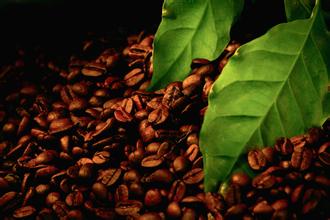
It mainly introduces the kinds of coffee.
Arabica (Coffea Arabica): accounts for 3/4 of the world's output, good quality, because the coffee tree itself is very sensitive to heat and humidity, so its growth conditions are at least higher than the sea level 900m highland climate, the higher the height, the better the quality of coffee beans baked. This variety has a low caffeine content (1.1-1.7%). The color of coffee beans is green to light green

Brazil's famous coffee brand Brazilian Yellow bourbon Coffee has a rich and balanced nutty flavor.
Professional coffee knowledge exchange more coffee bean information please follow the coffee workshop (Wechat official account cafe_style) front street-Brazil yellow bourbon coffee introduction bourbon coffee was originally planted in Reunion, the local is also known as bourbon island before 1789, green fruit will appear bright red when ripe, while yellow bourbon appearance will only stay in yellow, because of its low yield and less resistant to wind and rain

Colombia Coffee Estate Flavor Taste Introduction Lazmus Estate Colombia Coffee Brand
There are two series of coffee in the world, one is hard coffee represented by Brazil, which tastes strong; the other is soft coffee represented by Colombia, which tastes light. The difference lies in the altitude of the origin and the planting method. Brazil will plant coffee in hilly red soil more extensively, while Colombia will produce coffee in mountainous black soil intensive cultivation. Colombia coffee has a bitter taste, as clear as

What are the kinds of coffee beans?
Coffee species Editing Plant Classification Coffee beans Coffee trees belong to Rubiaceae evergreen trees, Rubiaceae plants have been dominated by plants with special effects since ancient times, quinine trees, which are regarded as specific drugs for malaria, and Dugen, which is used to treat amitoeba dysentery. Coffee is defined as the most unique alkaloid drinking flora. The fruit of coffee is made up of outer skin, pulp, endocarp and silver skin.

Chocolate sweet bourbon boutique coffee bean cultivation geographical location climate altitude brief introduction
Bourbon species, native to Bourbon Island in the Indian Ocean (now known as Reunion Island), is the second species caused by the Typica mutation. It belongs to the oldest existing coffee variety. The green fruit appears bright red when ripe, while the yellow bourbon species is derived from the cross between bourbon species and other varieties. Because of its low yield and relatively intolerant to wind and rain, it has not been widely planted. But growing at high altitudes

Control methods of cultivation techniques of small-grain Coffee
Disease control: 1. Coffee rust is the main disease of coffee, the most harmful, the damaged plants, light reduced yield, heavy death. Coffee rust is mainly harmful to leaves and sometimes to young fruits and twigs. After the leaves were infected, many light yellow spots appeared at first and enlarged in the form of water stains, followed by orange-yellow powdery spores on the back of the leaves, and there was a light green halo around the disease spots, and the disease spots in the later stage.

How about Xinzhai Coffee? _ how about Xinzhai Coffee? introduction to the cultivation of Xinzhai Coffee varieties
Professional coffee knowledge exchange more coffee bean information Please follow the coffee workshop (Wechat official account cafe_style) when the spring breeze blows green in April, the clear sky of Lujiangba in Baoshan is high and everything is verdant. Taking advantage of Qingming Festival short holiday, several photographers from Yunnan photographer qualification training Station walked into a rich and strange place embedded in the towering Gaoligong Mountain and the meandering Nujiang River.

Botanical classification of coffee beans
Coffee tree belongs to the evergreen tree of Rubiaceae. Since ancient times, most of the plants of Rubiaceae are plants with special effects, such as quinine tree, which is regarded as a specific drug for malaria, and Dugan, which is used to treat amoeba dysentery. Coffee is defined as the most unique alkaloid drinking flora. Usually after sowing for two to three years, coffee trees can grow to a height of about five to ten meters, but to prevent coffee beans from losing their aroma and flavor.

Cultivation techniques of small Coffee in Yunnan Province harvesting and processing of coffee beans
Timely harvest is an important link to ensure high coffee yield and improve product quality. The harvest time of small seed coffee is more concentrated, when the fruit turns red, it can be harvested. It should be picked along with ripening. After completely turning red, the fruit is easy to fall off. (9) Wet processing is generally adopted in processing. (1) washing fruit. Wash away the soil or sundries that stick to the fruit. (2) grading of fresh fruit. Green fruit, dried fruit,

Cultivation techniques of small-grain coffee: soil management
Weeding, covering the young coffee garden, weeds are easy to breed, especially in the rainy season, weeding should be done once a month. If the labor force is sufficient, clean the grass should be removed first. Adult coffee garden can be weeded once every 2 to 3 months. If you use herbicides, you should be careful not to spray on the branches and leaves of coffee, and it is more important and prudent to use them in young coffee gardens. Coffee has shallow roots and is vulnerable to adverse climatic conditions such as high temperature and drought.

How many coffee beans are there in the world? World quality coffee beans
At present, the most important coffee beans mainly come from two varieties, namely Coffea Arabica and Coffea Canephore. The former is the so-called Arabica coffee bean. The latter is also known as Robusta coffee beans. The plant, cultivation method, environmental conditions, shape, chemical composition and even processing method of the two kinds of coffee beans are all

What Arabica coffee beans does Luckin Coffee use? Learn about the three major varieties of coffee!
Professional coffee knowledge exchange more coffee bean information Please follow the coffee workshop (Wechat official account cafe_style) Coffee varieties can be divided into Arabica (Robusta) Liberica (Arabica) generally speaking, Arabica is mainly used in single or boutique coffee, Robusta is used to make instant coffee. From the orientation of taste

The story of St. Helena's coffee Napoleon and coffee in Arabica beans
At that time, St. Helena Coffee was said to cost more than 2000 yuan per jin, which was 3-4 times more expensive than the Blue Mountains of Jamaica. It only produced about 10 tons a year. It was brewed by hand, and each person drank about 30 ounces, as much as an espresso. People responded well to its fragrance and taste. At the same time, it was mellow and sweet, soft in acidity, and full of praise for its citrus flavor. It is said that the Holy Sea

Development of coffee cultivation in Laos
Coffee in Laos has gone through a lot of evolution over the past 20 years. The pace of development in the past 20 years has exceeded that of the past 80 years. Coffee in Laos dates back 100 years. France was colonial ruler of Vietnam, Cambodia and Laos, and they began experimenting with various crops in these areas. Coffee soon became available to farmers in Vietnam and Laos
Planting conditions of Coffee trees
The origin of the coffee tree is Ethiopia in Africa. In botany, coffee trees belong to the evergreen trees of the subgenus Rubiaceae, and coffee beans, commonly known as coffee beans, are actually the seeds of the fruit of coffee trees. They are called coffee beans only because they are shaped like beans. Climate is the decisive factor for coffee cultivation. Coffee trees are only suitable for growing in the tropics or subtropics, so latitude 25 degrees south and north.

Coffee beans Coffee Tree Coffee Tree Coffee Bean
Classification of plants Coffee beans Coffee trees belong to the evergreen tree of Rubiaceae. Rubiaceae plants have been dominated by plants with special effects since ancient times, such as quinine tree, which is regarded as a specific drug for malaria, and Dugen, which is used to treat amoeba dysentery. Coffee is defined as the most unique alkaloid drinking flora. The fruit of coffee consists of outer skin, pulp, endocarp, silver skin, and the above-mentioned layers.
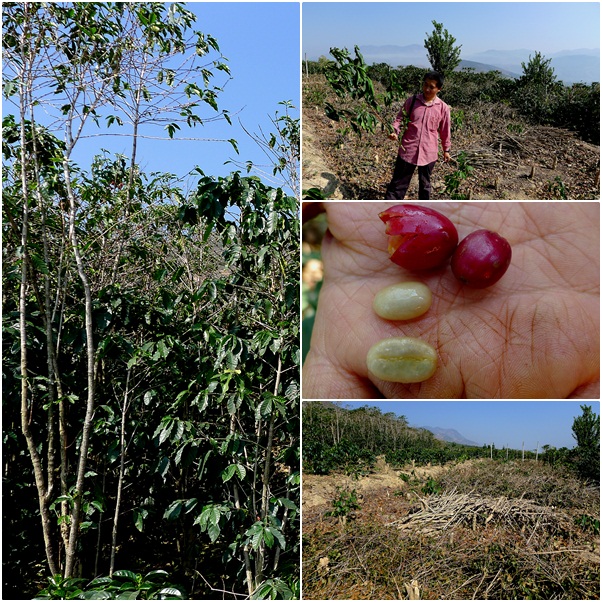
Yunnan Coffee Yunnan coffee varieties Tiebika and Bobang Yunnan coffee cultivation history
Yunnan coffee in China Yunnan coffee large-scale cultivation was in the mid-1950s, once planted on a scale of 4000 hectares. By the end of 1997, the province's coffee planting area had reached 7800 hectares. At present, the province's planting area accounts for 70% of the country's area, and its output accounts for 83% of the country's total. Whether it is from the planting area or coffee bean output, Yunnan coffee has established its dominant position in China. Jane